Background
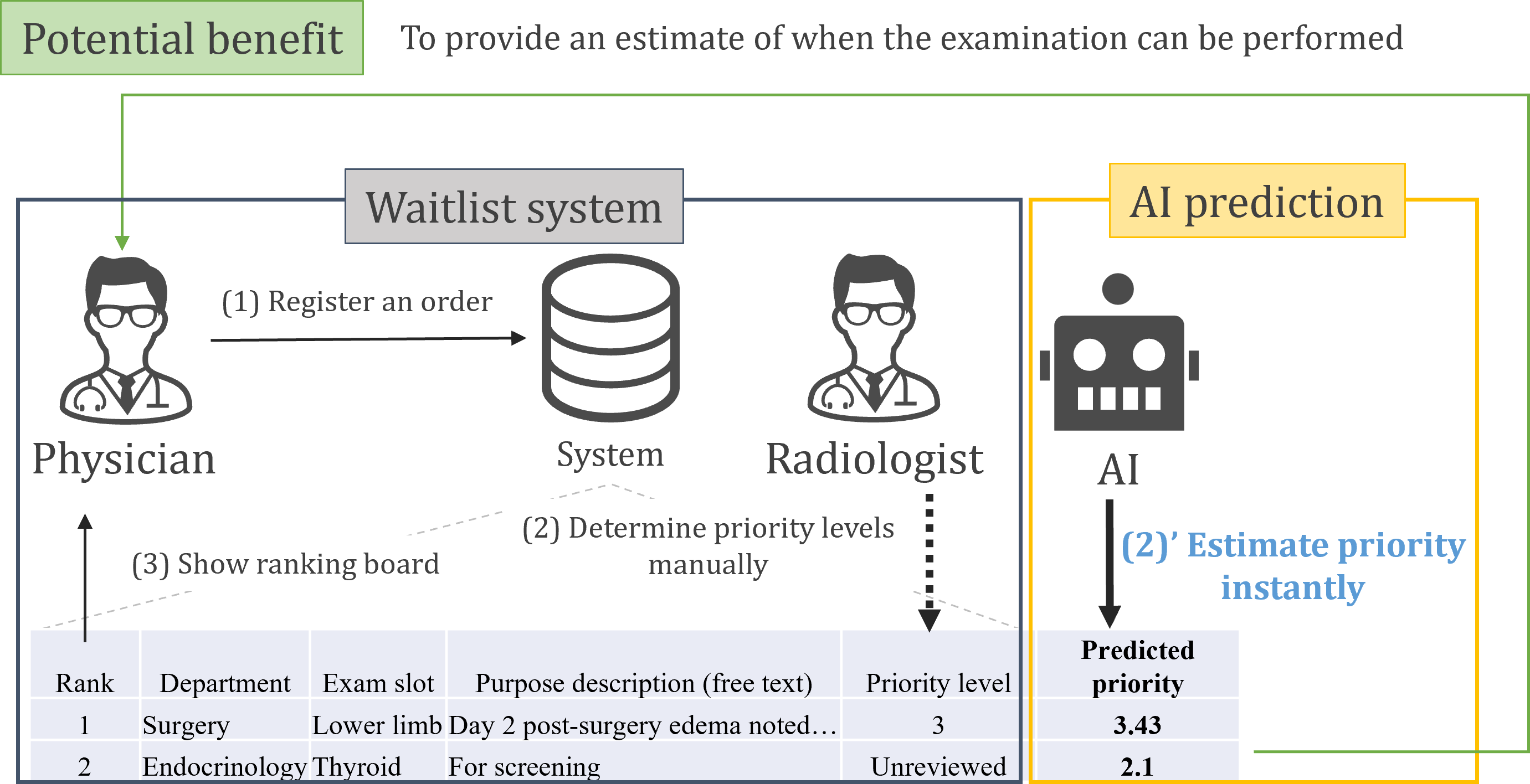
To prioritize patients on ultrasound waitlists, clinicians review each request and consider the examination’s purpose and urgency. We investigated whether language models could support this work using request text written in Japanese.
Approach
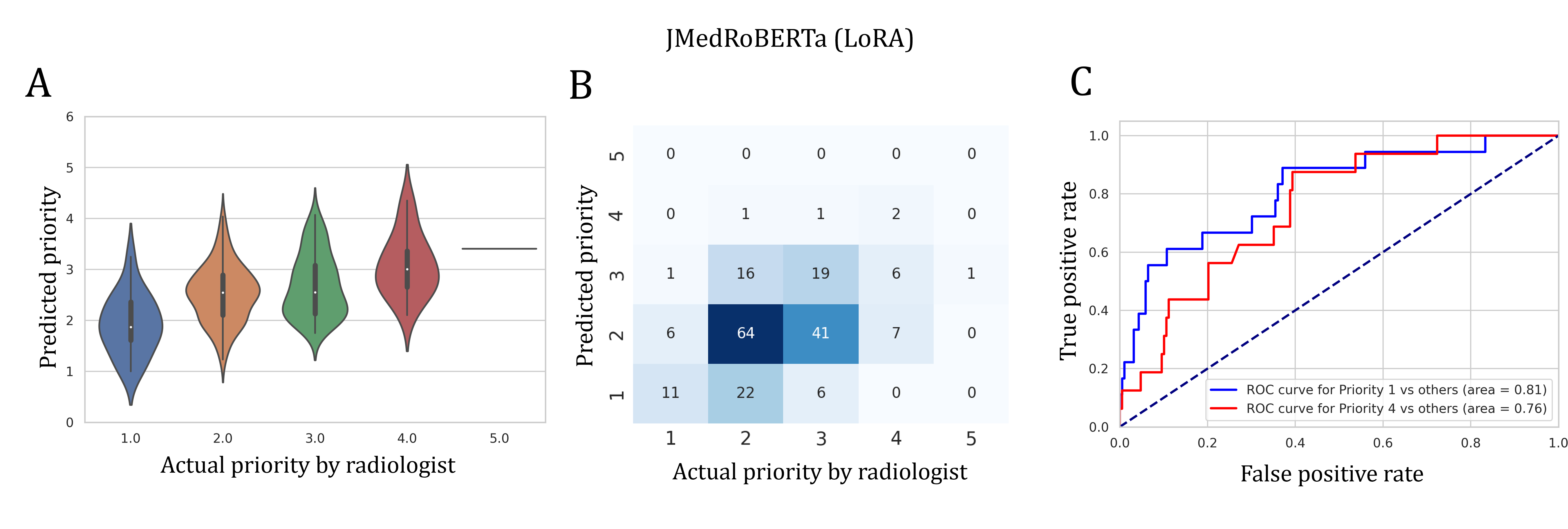
Using data from the existing waitlist system managed by hospital staff at Keio University Hospital, we retrospectively evaluated how well AI could estimate priority. We compared several language models and training methods.
Models pretrained on medical text performed well, and general-purpose models could also handle this task with sufficient additional training. Disagreement between a radiologist’s initial and repeat assessments also highlighted ambiguity in the reference labels themselves.
Current status and next steps
I reported the study as co-first author in JMIR AI in 2025. The work remains at the retrospective evaluation stage, and model outputs are not yet used to prioritize examinations in clinical practice.
I see two priorities for future work:
- Re-evaluation with newer language models: language models have advanced since the study and may now perform better on this task, so performance needs to be reassessed.
- Consistent priority criteria: priority decisions depend on multiple factors, and clinicians can disagree. Establishing consistent criteria is a challenge that extends beyond AI.
Related publication
- Training Language Models for Estimating Priority Levels in Ultrasound Examination Waitlists: Algorithm Development and Validation — JMIR AI, 2025.
Conference presentations
- 23 November 2023 — Priority estimation of ultrasound orders using language models
43rd Joint Conference on Medical Informatics · Poster presentation, 2-J-4-04.